
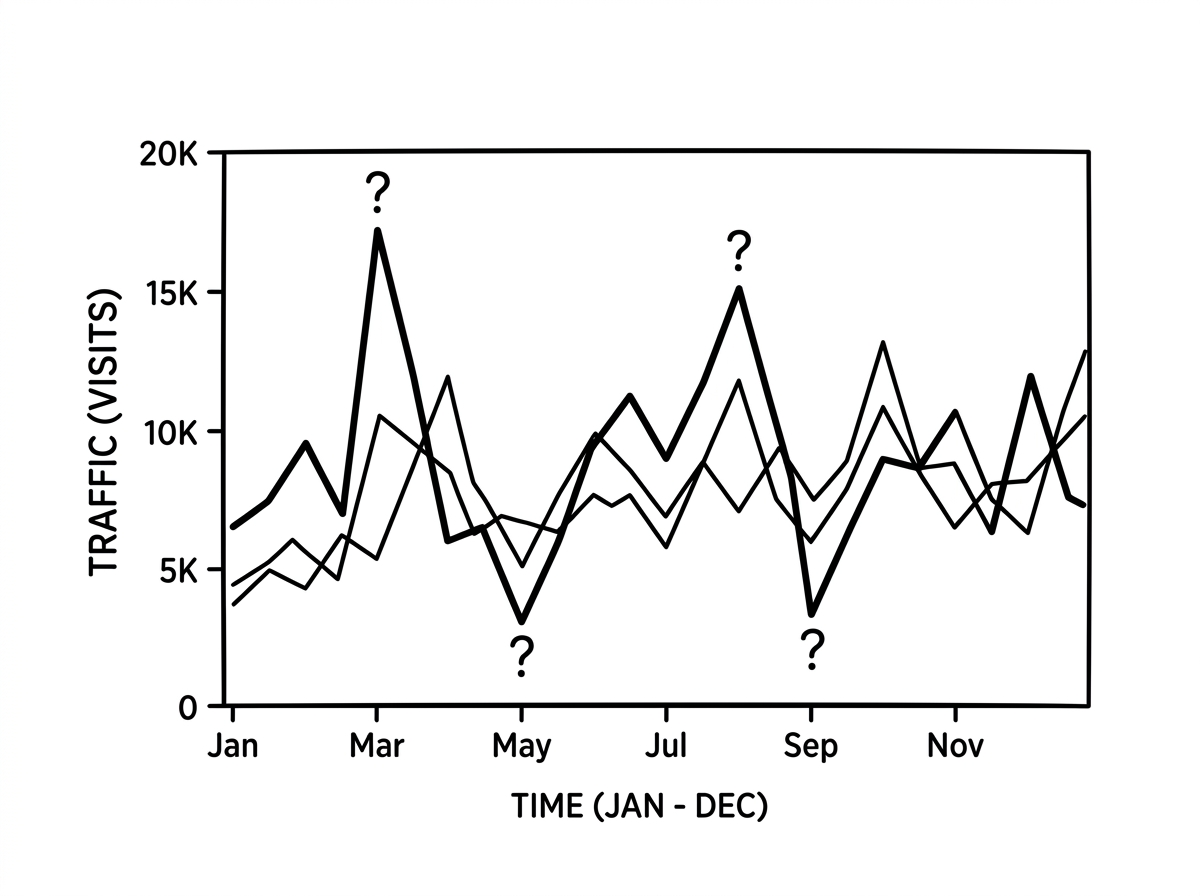
Google Analytics 4 automatically filters some known bots, but many businesses still make decisions using polluted traffic data. Sophisticated bots now mimic real users, trigger events, fill forms, and even distort conversion reporting.
For modern marketing teams, agencies, and eCommerce brands, the problem is no longer just “spam traffic.” The bigger issue is hidden AI-driven automation quietly corrupting attribution, campaign optimization, and ROI reporting.
Why GA4’s Built-In Filtering Is No Longer Enough
GA4 does remove many “known bots and spiders,” but Google itself acknowledges that:
- you cannot see how much bot traffic was excluded,
- the filtering cannot be disabled for verification,
- and unknown bots may still enter reporting pipelines.
That creates a dangerous blind spot.
Modern bots:
- rotate IP addresses,
- imitate human mouse movement,
- use residential proxies,
- generate fake engagement,
- and simulate conversions.
Some can even appear indistinguishable from legitimate users inside standard GA4 reports.
Common Signs Your Analytics Data Is Polluted
If you notice any of these patterns, there’s a strong chance your reporting contains non-human traffic:
- Sudden spikes in direct traffic
- Zero-second sessions
- Extremely high or extremely low bounce rates
- Traffic from countries you never target
- Strange referral domains
- Unrealistic conversion jumps
- Sessions with no meaningful interaction
These patterns are repeatedly cited as indicators of automated traffic contamination.
The challenge is that many businesses never investigate these anomalies deeply enough. They simply trust the dashboard.
The Hidden Cost of Bad Traffic
Bot traffic does more than inflate visitor numbers.
It can:
- waste advertising budgets,
- train ad algorithms on fake behavior,
- damage audience targeting,
- skew A/B testing,
- and produce misleading business decisions.
Several recent reports show businesses losing substantial portions of paid traffic budgets to invalid clicks and automated engagement.
When fake sessions are treated as real customers, every downstream metric becomes less reliable.
Why Agencies Are Struggling With AI Traffic
Most agencies still rely on:
- GA4 native filtering,
- basic spam exclusions,
- manual regex filters,
- or outdated bot lists.
The problem is that AI-driven automation evolves faster than static detection methods.
Traditional tools often focus only on:
- paid click fraud,
- basic crawlers,
- or known bot signatures.
But modern AI agents behave differently. They browse dynamically, scrape training data, simulate user flows, and generate behavior that looks increasingly human.
This is exactly where newer classification systems become important.
The Shift Toward Behavioral AI Classification
The next generation of analytics protection focuses on:
- behavioral fingerprints,
- session analysis,
- traffic intent classification,
- and real-time separation of human vs automated activity.
Instead of simply blocking “known bots,” modern systems classify traffic into multiple categories:
- human visitors,
- useful crawlers,
- AI agents,
- scrapers,
- suspicious automation,
- and malicious traffic.
That distinction matters because not all bots are bad.
Search engines, uptime monitors, and accessibility crawlers provide value. The real challenge is identifying harmful or misleading automation without damaging legitimate traffic.
What Businesses Should Do Next
If you rely heavily on GA4 reporting, paid acquisition, or eCommerce analytics, start by auditing your traffic quality before scaling campaigns further.
A practical approach includes:
- Reviewing suspicious traffic patterns weekly
- Monitoring abnormal geographic behavior
- Validating conversions against CRM activity
- Using server-side validation where possible
- Adding advanced traffic classification tools beyond GA4
The companies that adapt fastest to AI-generated traffic will make better decisions because their reporting remains trustworthy.
Clean data is no longer just an analytics problem.
It is now a competitive advantage.
For more information about AI traffic classification and GA4-native traffic analysis, visit BotLens.